Key points
- Gluten proteins are what give wheat dough its water absorption, cohesiveness, viscosity and elasticity.1
- They fall into two groups: gliadins, which are mostly single molecules, and glutenins, which form very large aggregates.1
- Kneading and resting help these proteins hydrate and organise into the network that traps gas and lets bread rise.
Two families of proteins
Food chemists separate wheat gluten proteins by how they dissolve in aqueous alcohol. The soluble fraction is the gliadins; the insoluble fraction is the glutenins.1
| Gliadins | Glutenins | |
|---|---|---|
| Structure | Mostly monomers (single protein molecules) | Aggregates of subunits linked together |
| Size | Molecular weights of about 28,000–55,000 | Aggregates from about 500,000 to more than 10 million |
| Subtypes | α/β-, γ- and ω-gliadins | High- and low-molecular-weight subunits |
Figures from the review cited below (reference 1).
The same review notes that non-covalent forces — hydrogen bonds, ionic bonds and hydrophobic interactions — drive the aggregation of both fractions and influence the structure and physical properties of dough.1
What this means at the bench
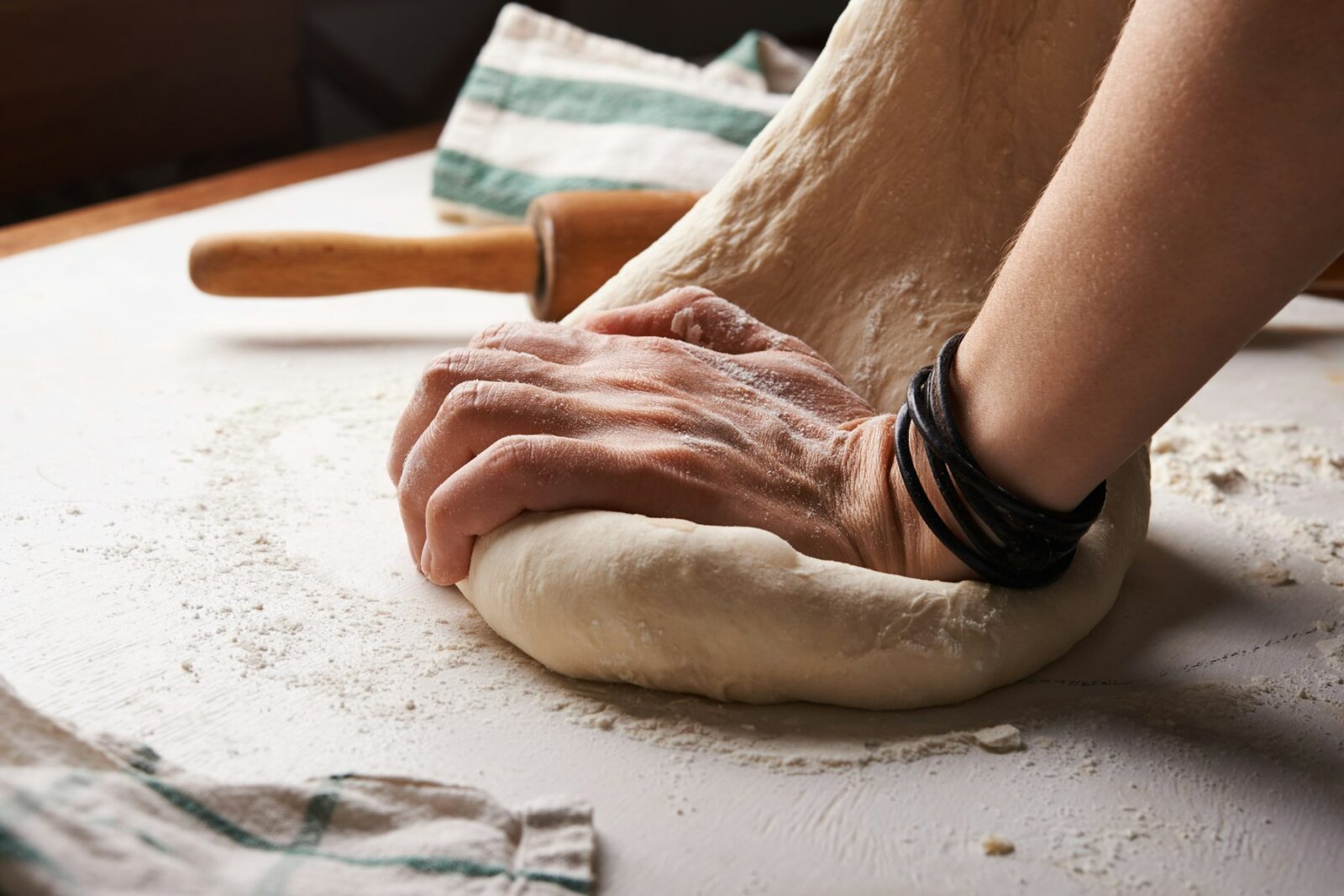
- Hydration first. Gluten proteins only form a network once they absorb water, which is why recipes often rest flour and water before adding salt or kneading.
- Kneading builds strength. Mechanical work helps align and connect the protein network; stretch-and-fold methods achieve similar results more gently over time.
- Resting relaxes. A rested dough is easier to shape because the network has had time to relax.
- Flour choice matters. Flours sold for bread are generally higher in protein, which supports a stronger network for chewy, well-risen loaves; lower-protein flours suit tender cakes and pastry.
A note on health
People with coeliac disease or other gluten-related conditions must avoid gluten under medical advice. This explainer covers baking chemistry only.
References
- Wieser, H. (2007). Chemistry of gluten proteins. Food Microbiology, 24(2), 115–119. PubMed 17008153.
Last updated October 28, 2026. Spotted an error or an outdated price? See our corrections policy.