Key points
- The Maillard reaction is a cascade of reactions between reducing sugars and amino groups (from amino acids and proteins) that produces brown colour and many flavour compounds.
- It is different from caramelisation, which involves sugars alone.
- Water holds a surface near its boiling point, so browning speeds up once a surface dries — which is why dry surfaces sear and crust better.
What is happening, chemically
The reaction is named after the French chemist Louis-Camille Maillard, who studied it in the early twentieth century. A landmark 1953 review by John E. Hodge organised the chemistry into a scheme — later known as the “Hodge scheme” — that is still taught in food science.1
In outline, the carbonyl group of a reducing sugar reacts with an amino group to form unstable intermediates. Hodge’s review emphasised the importance of a step called the Amadori rearrangement. These intermediates then break down and recombine into hundreds of compounds: brown pigments (melanoidins) and volatile aromas that we recognise as roasted, toasty and savoury.1
Maillard reaction versus caramelisation
| Maillard reaction | Caramelisation | |
|---|---|---|
| What reacts | Reducing sugars + amino groups (amino acids, proteins) | Sugars alone |
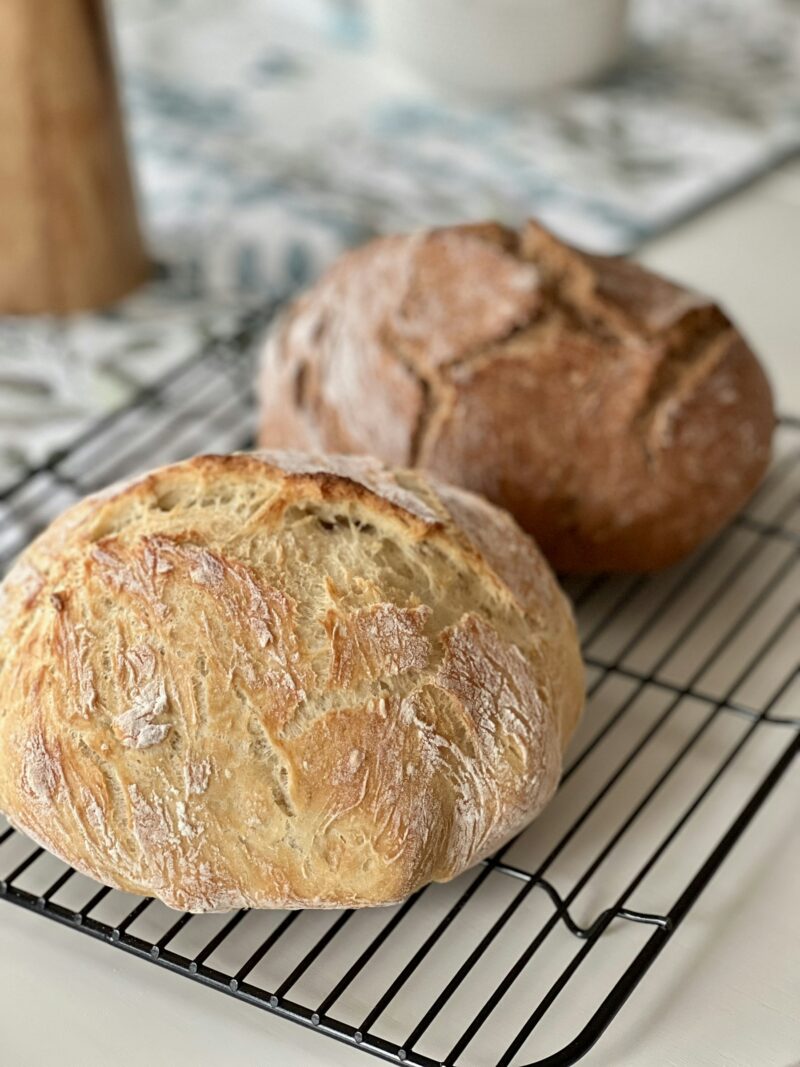
| Where you see it | Bread crust, seared meat, roasted coffee, toasted nuts | Caramel, the edges of sugar syrups |
| Flavour | Roasted, savoury, toasty, complex | Sweet-bitter, buttery caramel notes |
In practice many foods show both at once: a brioche crust contains sugar, egg and milk proteins, so caramelisation and Maillard reactions overlap.
Why a dry surface browns better
While a surface is wet, evaporating water keeps it close to water’s boiling point — 100°C (212°F) at sea level. Browning reactions proceed much faster once the surface dries and can climb above that temperature. That is why cooks pat meat dry before searing and why bakers vent steam partway through baking a crusty loaf.
Using it in the kitchen
- Dry first. Pat proteins dry and avoid crowding the pan, which traps steam.
- Mind the pan. Heavy pans that hold heat recover faster when cold food goes in.
- Steam, then dry heat, for bread. Early steam lets a loaf expand; removing it later lets the crust dry and brown.
- Egg and milk washes. Adding proteins and sugars to a surface encourages browning on pastries and breads.
References
- Hodge, J. E. (1953). Chemistry of browning reactions in model systems. Journal of Agricultural and Food Chemistry, 1(15), 928–943. doi:10.1021/jf60015a004.
Last updated October 28, 2026. Spotted an error or an outdated price? See our corrections policy.