
Some links on this page are affiliate links. If you buy through them, Erisha may earn a small commission at no extra cost to you. We only feature things we would happily recommend to a friend. Read our disclosure.
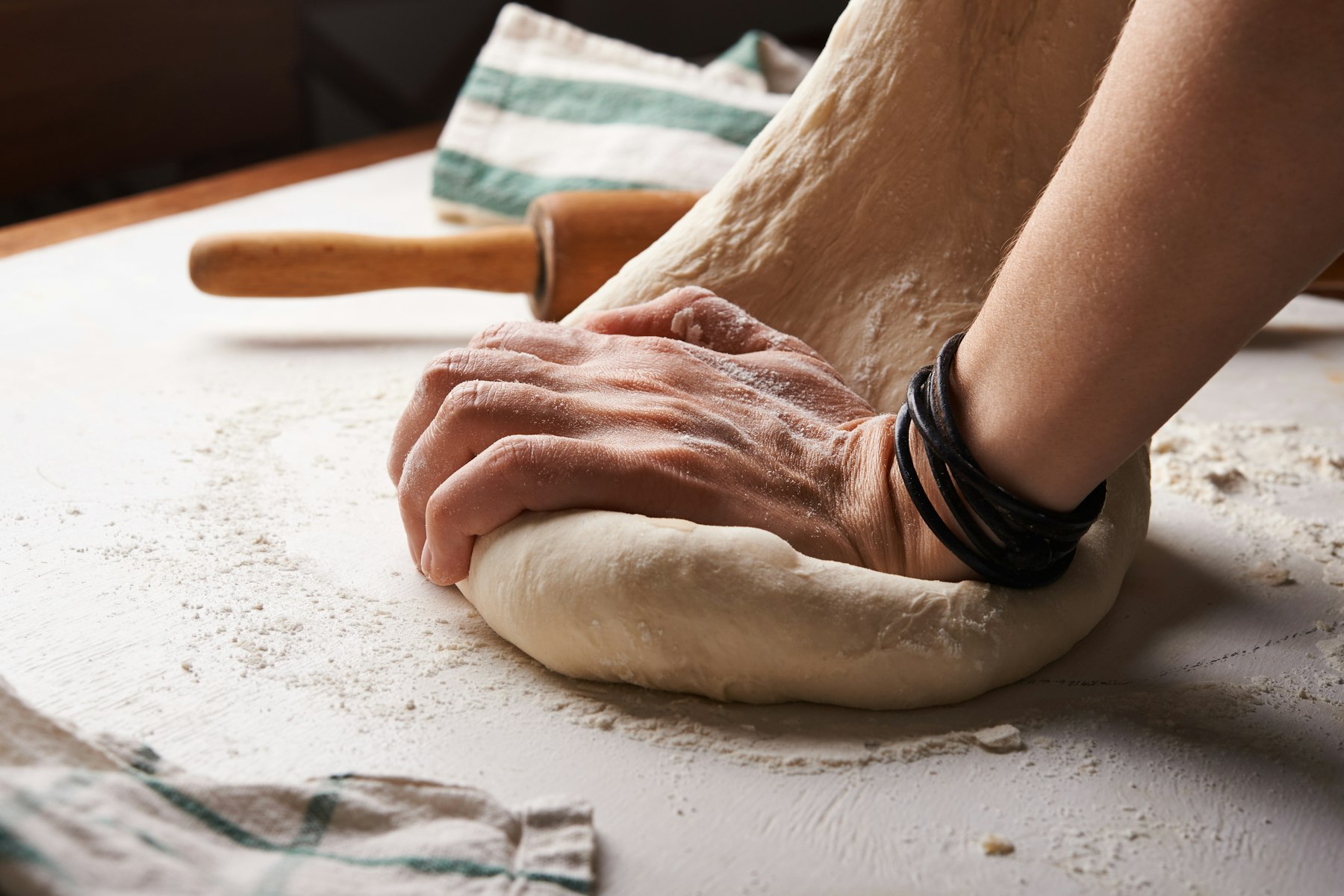
You can bake a beautiful sourdough loaf with a bowl, your hands and a hot oven. But a handful of inexpensive tools make the process calmer, more consistent and more enjoyable. Here is what we would put in a beginner’s kit, and what you can safely skip.
The true essentials
A digital kitchen scale
Sourdough is a recipe of ratios. Weighing flour, water, salt and starter to the gram is the single most important habit for consistent bread.
Check price on Amazon.caA heavy lidded Dutch oven
Baking inside a preheated cast-iron pot traps steam, which lets the loaf expand fully before the crust sets. It is the secret to an open crumb and a blistered crust at home.
Check price on Amazon.caA bench scraper
For dividing, pre-shaping and building surface tension in the dough, then cleaning the counter afterwards. Inexpensive and indispensable.
Check price on Amazon.caA banneton (proofing basket)
Holds the shaped loaf during its final rise so it keeps its shape, and leaves the classic floured spiral on the crust.
Check price on Amazon.caHelpful, not essential
- A bread lame. A razor blade on a handle for scoring clean, confident cuts. A very sharp knife will do at first.
- An instant-read thermometer. Useful for checking water temperature and doneness. Most sourdough loaves are baked through at around 96 to 98 °C (205 to 208 °F) inside.
- Glass jars with straight sides. Make it easy to see how much your starter has risen.
- Rice flour. Dust the banneton with it, as it does not absorb moisture the way wheat flour does, so the dough releases cleanly.
What you can skip
Proofing boxes, specialist starter kits and dough whisks are all pleasant to own but unnecessary at the start. A warm corner of the kitchen and a wooden spoon will serve you just as well while you learn.
A note on your starter
A healthy starter matters more than any tool. Feed it regularly with equal weights of flour and water, keep it somewhere comfortably warm, and use it when it has roughly doubled and smells pleasantly tangy. For a step-by-step method, read our gentle beginner’s guide to sourdough at home.
Shopping for more? Browse our curated shop, or visit the bakery at 242 Vintage Gate, Brampton.